

Helping Them Trust “The Suits”: Rewiring the Relationship Between Physicians and Senior Leaders
It’s unfortunate but true: In medical school, in residency, and in their first job in the field, young physicians are often conditioned to dislike (or at least distrust) hospital administrators. This conditioning can be both overt and covert. Either way, it creates this innate sense of suspicion—especially in physicians right out of residency and fellowship—that may extend to division vice president or CEO of the system. It’s all leadership.
When I talk to physicians, I find this suspicion isn’t necessarily because they’ve had a bad experience. It’s due to the messages they get from their instructors in medical school. In their preparation to practice, they hear things like, “You’re the captains of the ship,” or “You’re going to get out and run medicine,”— and all too often—“You’ve got to watch out for those suits down in administration.”
COVID, of course, exacerbated the distrust. During those several dark years the “suits” were trying to stay out of the way to ensure that everyone had enough PPE. Their goal was to ensure that everyone had what they needed—but research indicates that their absence sometimes created a layer of distance.
Of course, distrust between physicians and administrations has never been a good thing, but in today’s healthcare landscape it’s a huge problem. A strong sense of partnership is a dire need. And while we may not immediately convince medical school faculty to build the trust needed for that partnership, we can begin rewiring our approach with newly practicing physicians.
The good news is that healthcare leaders (and veteran physicians) have a unique platform. You’re looking back through the rear-view mirror lens of your training, development, and career. We can use that to give the newer physicians a front-windshield view where they can think differently about their role: They will be leaders as well as MDs. (There’s a reason why the windshield is 50 times bigger than the rear-view mirror. We are meant to look forward.)
This can be done without making it sound like you’re an advocate for the “suits” or that you’re saying, “We’re going to brainwash you to think like a hospital CEO today.” Here are a few tactics to try:
Talk about the positive connotations of healthcare leadership. (In our industry, very few sentences that include “administration” are positive!) Yet the word is actually Latin by root. It comes from the word “administrare,” which means “to minister to.” How often do we ever think of the gentlemen or ladies in suits as ministers? Rarely, I’m willing to bet!
Get intentional about building trust. Remember, we’re talking about new physicians. At this point they are young enough that they can be rewired to think there is real value in leadership as partnership (as opposed to the word’s strict interpretation as “captain of the ship”).
We need to build trust with our teams and do so multi-directionally. In an office practice, that can be mean getting to know everyone on the team personally…and not forgetting to reward and recognize every chance you get.
If you’re in a clinical delivery setting where you have primary care attendings, consultants, and specialists, it’s important to build horizontal trust between those physicians. That means overcommunicating…going beyond the typical back and forth in the EMR.
Finally, one of the most key elements of trust is that between the nursing team and the physicians. Ask any veteran physician who missed on this one: They’ll tell you how the nurses can make their lives much harder. Conversely, ask a new physician who got this one right and they’ll be quick to tell you how the nurses go out of their way to make sure their lives are much better.
As members of administration, there are things you can do to build trust with these important new additions to our medical staff. For example…
Look at the data so you can diagnose before you treat. In The Human Margin: Building the Foundations of Trust—written by Dr. Katherine A. Meese and Quint Studer and recently published by ACHE, “Intent to stay” was one of the “trust” correlates. New physicians can be asking, “What do I think about the health system?” or “What’s my perception of the health system in almost a net promoter score environment?”
We have found that there are a few key elements in engagement surveys that tend to indicate trust. They are:
- “Does the organization care about my wellbeing?” This is partly about burnout but it’s also about a physician’s desire to grow and develop. Are they investing in me? Are they going to send me through a program like The Path to Physician Leadership, a certificate program created in partnership with University of Texas-Dallas, Alliance for Physician Leadership, and Physician Leadership Career Network? If so, it’s a strong sign that your organization cares about its physicians.
- “Do I have a sense of belonging?” As we see the data that indicates the potential itinerant nature of some young doctors, this element is so key. Building a sense of belonging essentially means creating a practice environment where physicians can’t imagine practicing anywhere else. The operative question we’ll want to answer is “What draws and keeps me here to practice?”
- “Do I trust senior leadership?” (Do I like the suits? Do I trust the suits?)
So…senior leaders, what are some things you can do to build and restore trust with physicians? Here are a few of the most important:
Have a shared agenda with physicians. Think of it this way: “It’s not me sharing to you, it’s me sharing with you. You have input.” This mindset shift is such a lubricant to success. Having a shared agenda means having Quality at the top. It means teaming to create the best, no matter one’s role as a medical staff member. A shared agenda should include a focus on Efficiency…things working the way should and as we’d expect them to every day. It means proactively seeking Input. It means looking for ways to Recognize the members of the medical staff for their leadership and support of the health facility or system, so they feel our appreciation on more than just Doctor’s Day in March.
Pivot from Resiliency to Replenishment. Don’t talk to physicians about resiliency. They are plenty resilient already! Instead, find ways to replenish them. Help them reconnect to their sense of purpose. Ask them, “Why do you practice medicine?” “Why do you work here?” Actively engage them in these conversations rather than guessing. Respond in meaningful ways.
Create a well-run operation. Physicians want to do their very best work. Give them an environment where they can. Nothing says, “I care about you” more than a healthcare operation that’s humming.
If you’re a healthcare leader reading this, we have covered some very “doable” tips. Try just a few. Let us know what works best!
If you’re a veteran physician reading this, ask yourself, “What would my world have felt like if some of these things were in place?”
If you’re a new-to-practice or younger physician, ask yourself, “How will it feel to practice in a setting I had never imagined…one of mutual trust…one that makes my practice enjoyable?”
The answer is, It will feel great…and not just to physicians but to everyone. I say “will” (rather than would or could) on purpose. We are entering a new era in healthcare, one where trusting relationships between all parties are no longer optional. We will rise to the occasion. Healthcare people always do. We’ll build a better future, where all will thrive, together.
# # #
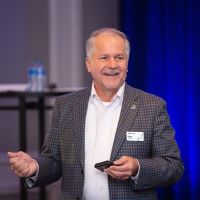 About Dan Collard:
Dan Collard is a seasoned healthcare executive with more than 31 years of healthcare industry experience including operations, consulting, and technology start-ups. He is the co-founder of Healthcare Plus Solutions Group along with long-time colleague Quint Studer.
Most recently, Dan served as Executive Vice President and Chief Growth Officer of TeamHealth, one of the nation’s largest hospital-based physician practices.
Prior to joining TeamHealth, Dan served as President of Press Ganey’s Strategic Consulting Division and as CEO of EVOQ Medical, Inc. a healthcare technology start-up in Atlanta.
Dan spent 13 years at Studer Group as a senior leader, where he served organizations ranging from rural hospitals to complex health systems and academic medical centers.
Prior to his time at Studer Group, Collard was a health system operator within Life Point Health.
Dan has always enjoyed the role of change agent within each organization he has led. In healthcare operations, Dan and his leadership teams helped their organizations attain best-in-class performance across a balanced set of metrics: quality, patient experience, physician and employee engagement, volume growth and financial performance.
His passion for improving healthcare led to Dan being asked to testify In June 2014 before the House Committee on Veterans Affairs in the run-up to the bill signed into law that August.